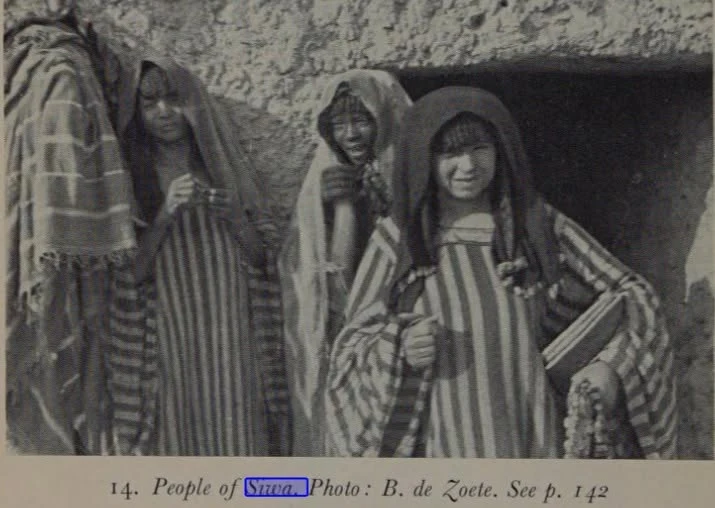
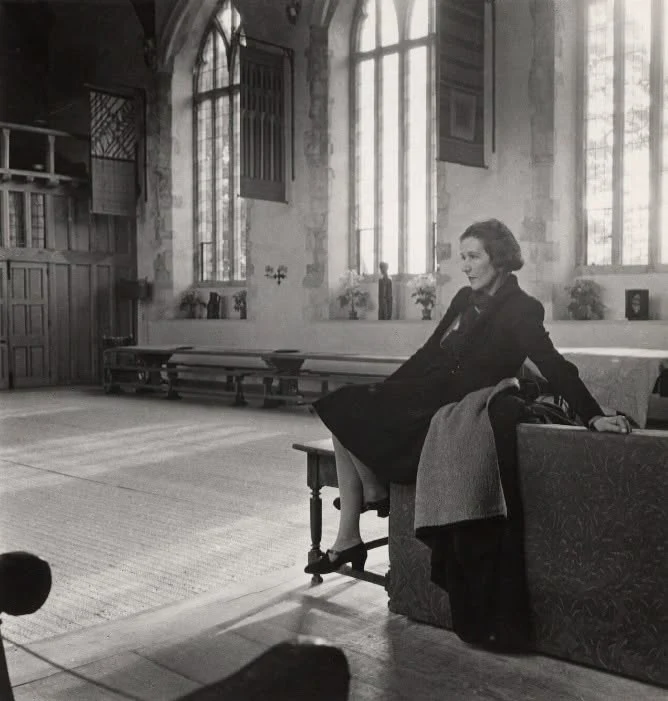
It appears that the previous post in the “Pioneer in the Desert” series was not actually the last. I recently rediscovered a book purchased years ago, "The Thunder and the Freshness", which contains a chapter entirely dedicated to Beryl de Zoete’s journey to Siwa. De Zoete was an extraordinary figure: a ballet dancer, orientalist, dance critic and researcher, as well as a translator of Italian authors such as Italo Svevo and Alberto Moravia.
Beryl de Zoete visited Siwa from March 15 to 19, 1939, documenting the experience in a diary that, two years later in 1941, was included in the collection "The Thunder and the Freshness".
Born in London to a Dutch-origin family, she studied English at Somerville College, Oxford, graduating in 1901 when women’s access to higher education was still exceptional. In 1902 she married Basil de Sélincourt, but the marriage ended after a few years. She had a long and significant relationship with orientalist Arthur Waley, without ever marrying him.
After starting out as a ballet dancer and eurhythmics instructor (a discipline developed by Émile Jaques-Dalcroze), she dedicated herself to the study of theatrical and dance traditions of India, Sri Lanka, and Bali. She collaborated with Walter Spies on the renowned “Dance and Drama in Bali” (1938), also writing volumes and articles on Indian dance (1953) and Sri Lankan dance (1957), published in outlets such as The Daily Telegraph and New Statesman & Nation.
De Zoete’s diary provides some of the most vivid and poetic descriptions of the oasis:
The Desert Journey: nine hours over a barren rocky plateau, mirages of clear water and illusory castles, blue mountains on the horizon revealed as fantastically shaped rock formations.
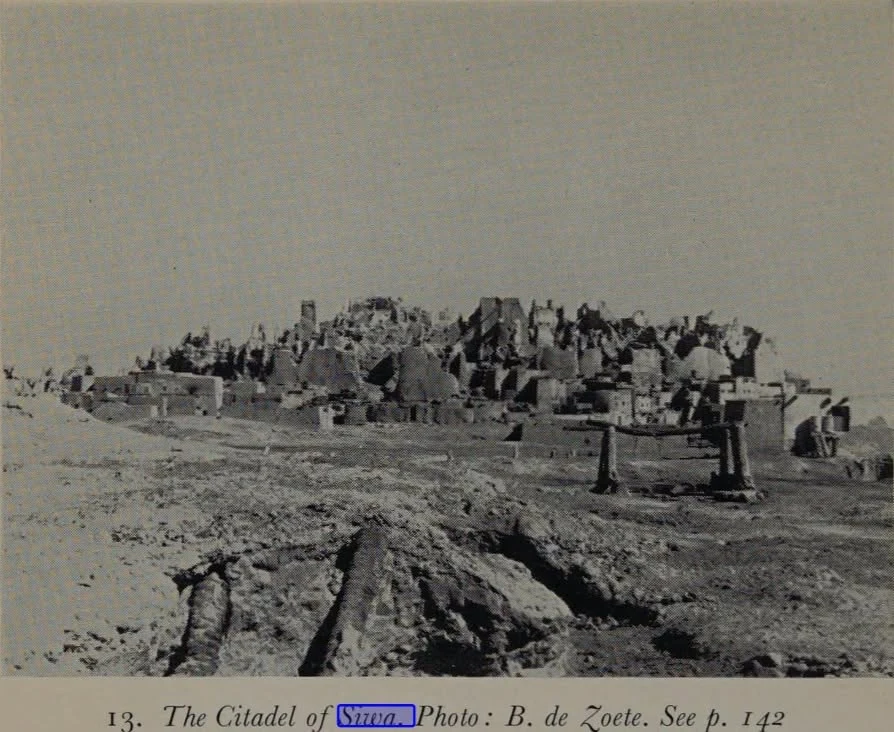
Oasis and Architecture: the oasis floor lies below sea level; the old citadel described as “a crouching bull” with four different aspects: sphinx, bull, Egyptian cat, and English cat; mudbrick houses decaying in the rain and condemned as unhealthy by authorities.
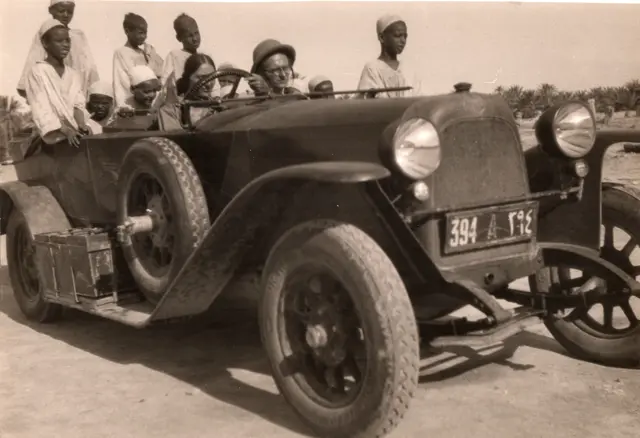
Cultural Encounters: Ali Ford (local man with a strong cockney accent), Senussi Ford (ingenious mechanic who transformed an old Ford engine), Aisha (extraordinary woman living alone, scandalous for Siwa, who adopted men’s clothing, earned a living sewing and selling jewelry, and was famous for her drumming and singing).
Historical and Strategic Context: the journey took place in a prewar period of tension; de Zoete notes three lines of barbed wire defense between Mersa Matruh and the Italian territory, the strategic value of accidentally discovered Roman wells, and the presence of an Egyptian governor (Mamur) ruling with “threats of prison and sword”.
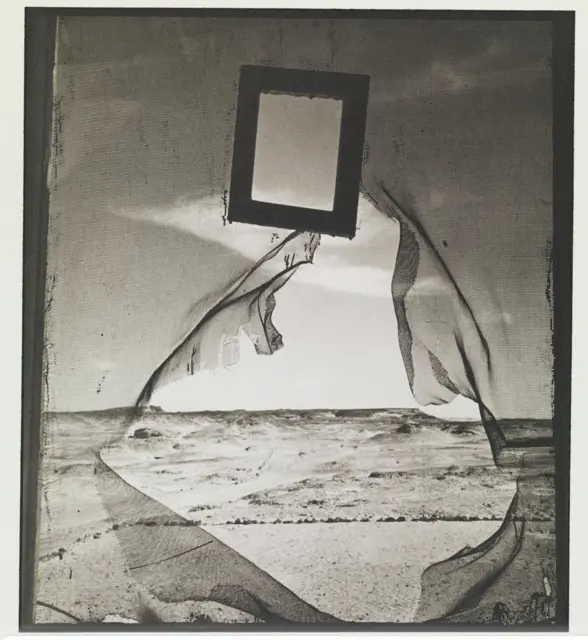
Literary Significance: this chapter stands out as one of the most literary and sensitive travel narratives about Siwa ever written, seamlessly combining precise ethnographic observation, poetic landscape description, a keen awareness of cultural change, and Roland Penrose’s references that enrich the geological understanding of the place
 Enlarge
 Enlarge
 Enlarge
 Enlarge